A little more to talk about.
Real-world projects give children stories worth sharing. Understand what they’re trying, what’s changing and where a little encouragement could help.
See how learning becomes visible
The learning often happens before the final answer.
A changed idea, a useful question, a second attempt. These moments show how your child is learning to make sense of the world.

Question what you find.
Your child compares sources, asks what makes an explanation convincing and learns to give reasons for their choices.
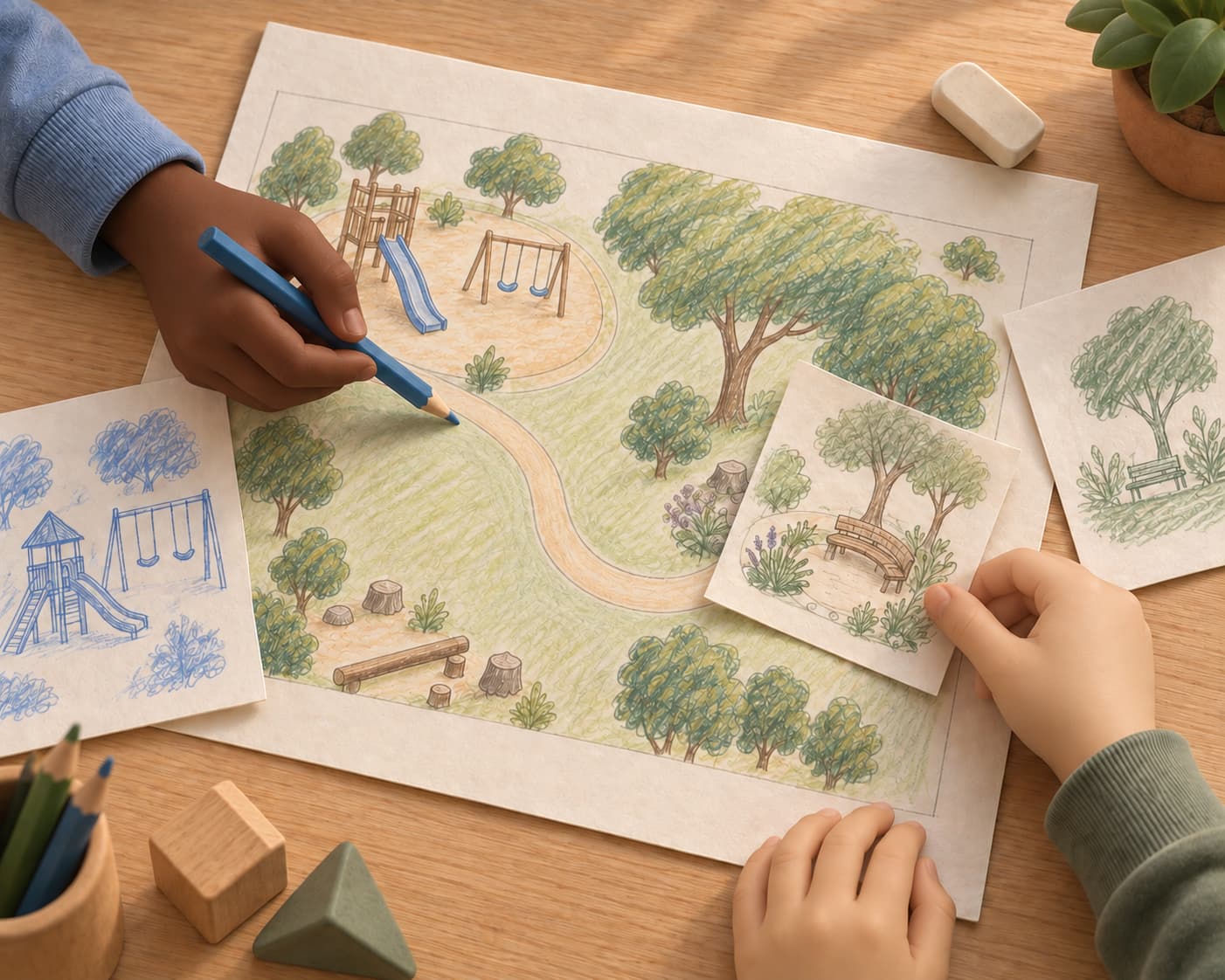
Think it through together.
Sharing ideas helps children see another perspective, explain their own thinking and find a way forward together.
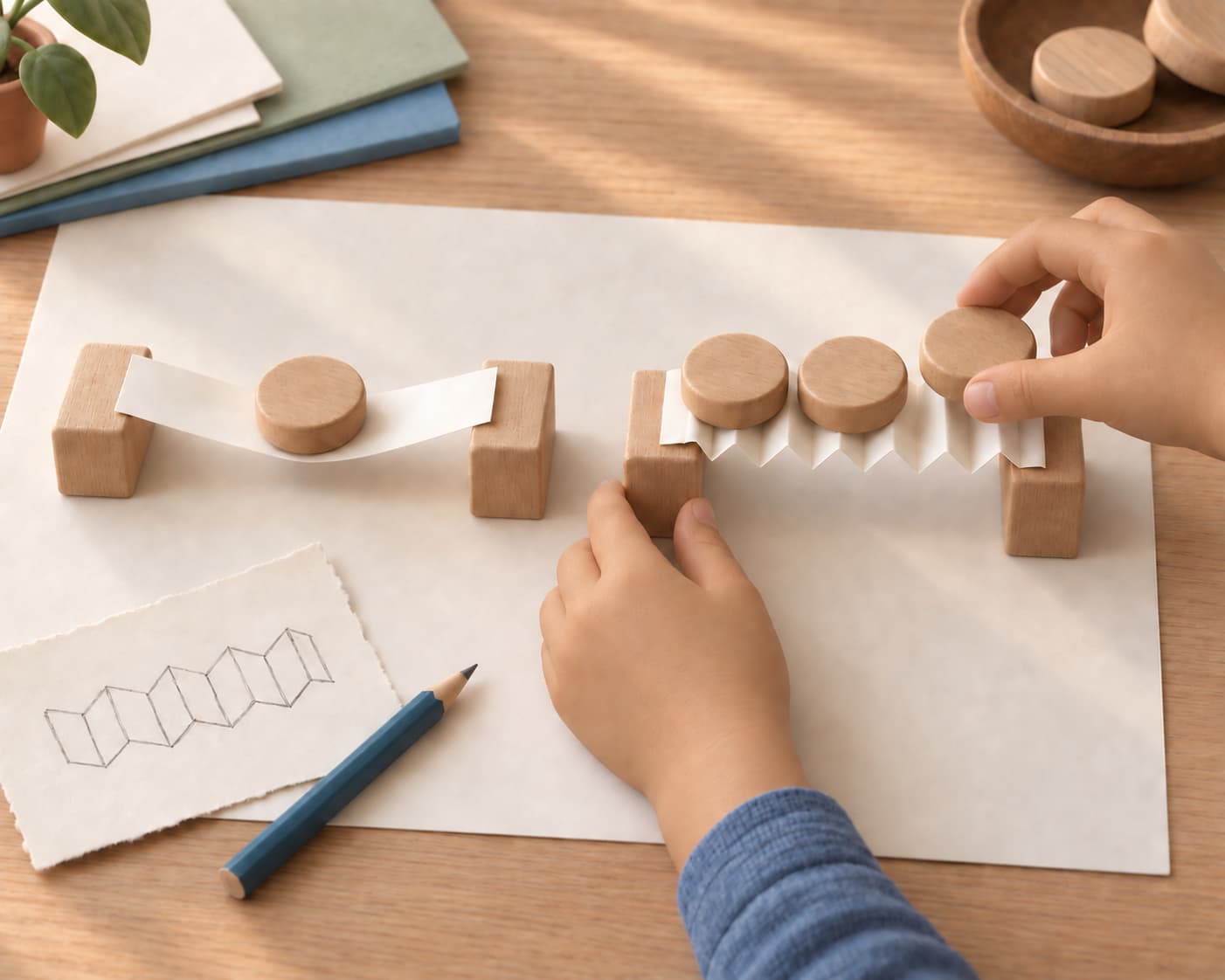
Learn from feedback.
A test or a conversation can spark a better idea. Your child tries again and discovers what makes the work stronger.
Small moments. A clearer picture.
Weekly glimpses show what is changing. The project report brings those moments together, with context for what comes next.
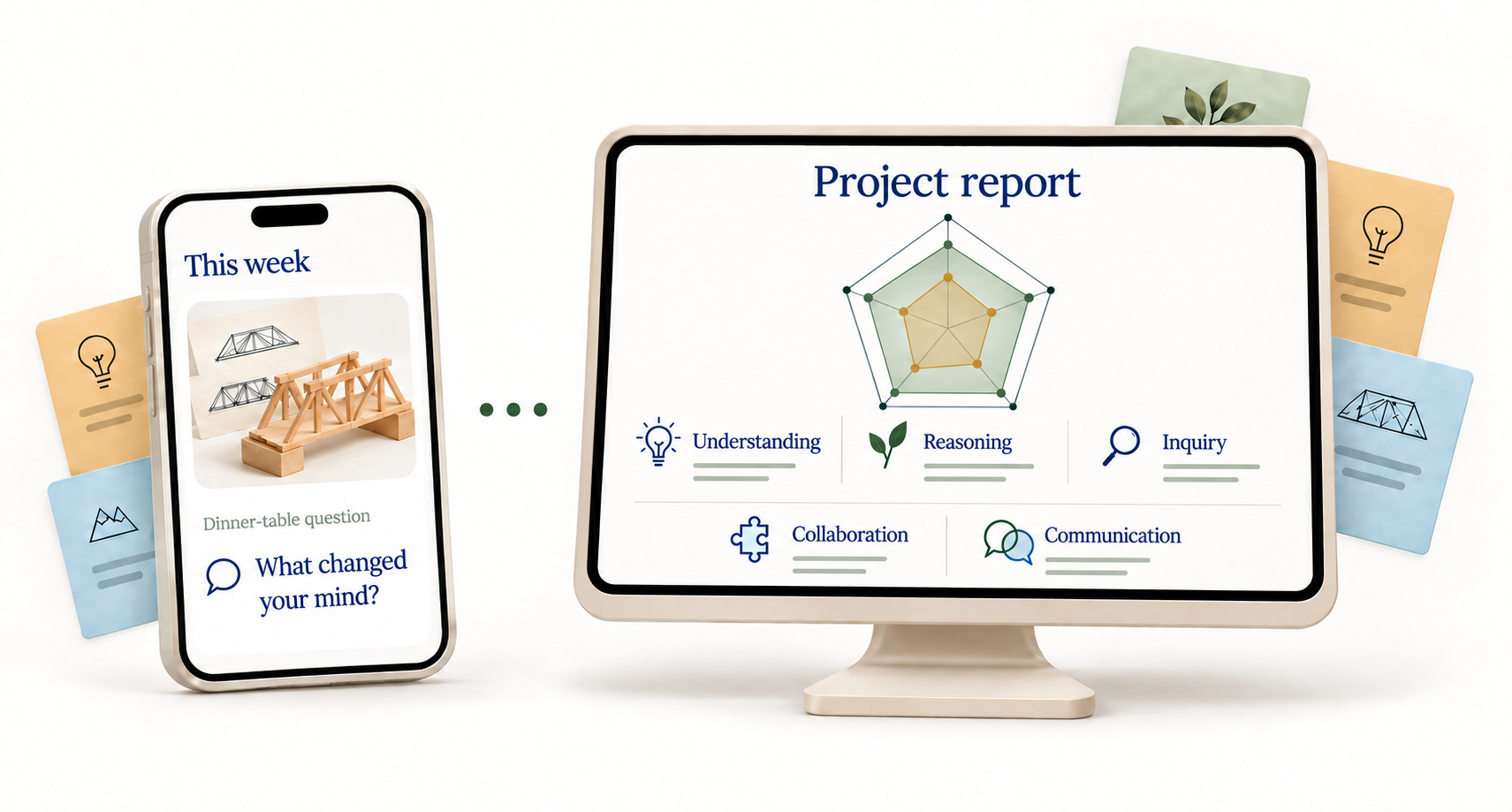
During the project
This week: A new approach
Compared two designs. Strengthened the supports.
Dinner-table question: What changed your mind?
At the end
Project report
An illustrative view of five learning skills across the project.
- Understanding
- Reasoning
- Inquiry
- Collaboration
- Communication

Stay close to their learning. Give their ideas room.
A thoughtful summary can help you recognise a breakthrough, understand a challenge or find a question your child wants to talk about. Teachers bring the classroom context; you bring your knowledge of your child.
Ask them to teach you something they have learned. Build or cook together, or follow a question on a walk. Small moments of shared curiosity can give children the confidence to explain, experiment and make the learning their own.

AI assists. Students think. Educators decide.
A useful prompt gives your child a next step: compare two ideas, explain a choice or try another approach. Working through that question is where understanding grows.
Teachers set the boundaries for AI and interpret the learning in context. Your child stays responsible for their ideas, and educational decisions stay with the people who know and teach them.
Trust deserves specific answers.
Understanding your child’s learning also means understanding how their information is handled. These are the boundaries behind a useful relationship between families, schools and Dwyl.

What information is collected, and why?
Project files, explanations, revisions and feedback can help teachers understand how learning develops. Collection needs a clear educational purpose, with the school’s service information explaining the records involved. Signals such as login times are outside that purpose when used to judge a child’s motivation or character.
Who can see it?
Each person needs the information relevant to their role: students need to understand their own learning evidence, teachers need context for teaching and assessment, and families need a summary about their own child. School leaders need group-level patterns, with individual conversations kept within appropriate access boundaries.
What gets shared with families?
A family summary brings together what your child is learning, how their thinking develops and where support could help. Drafts, private tutor conversations and peer comments stay outside routine family reporting, as does another student’s personal information. This leaves children room to explore while giving you meaningful ways to stay connected.
How is sensitive information treated?
A sensitive disclosure needs care and context. A safeguarding concern belongs with the appropriate people following the school’s policy, with access limited to relevant information. Private conversations should remain outside automatic family notifications, and sensitive information must not become a label for a child’s character, mental health or future potential.
Which AI systems or service providers are involved?
The public website uses Vercel for hosting and analytics, Notion for the interest list and Google Workspace for email, as described in our privacy notice. Classroom use requires its own service-specific list of AI systems and providers, so families can see which organisations are involved in their school’s use.
How long is information retained?
Different records serve different purposes, so a learning summary and a private conversation may need different lifespans. A classroom retention period has not been verified for publication. The public-site privacy notice explains that interest records have no fixed automatic deletion period and gives a contact for removal requests.
What happens if something is wrong?
Students need a way to explain missing context, question an observation or demonstrate their understanding again. Teachers review consequential educational judgments using evidence and their knowledge of the child. Families can raise an apparent error through their school’s process so the conversation includes the people best placed to respond.
How can a student or family raise a concern?
Start with your child’s teacher or the school’s usual process for learning and assessment questions. For questions about Dwyl’s use of information, use the contact route in the privacy notice. An initial message describing the issue is enough; keep student records, health details and private conversations out of that first message.
Which safeguards have been verified?
The public-site privacy notice describes request validation and safeguards against submission-body logging. Independent classroom certification has not been verified for publication. Any assurance for a school service needs named evidence explaining what was checked, when it was checked and which part of the service it covers.
Help them find their way in a changing world.
Curiosity grows when someone takes an interest. Each question, shared project and chance to try again helps your child build the judgment and confidence to find their own way.

At school and at home, give their interests room to grow.
Explore Dwyl for your school